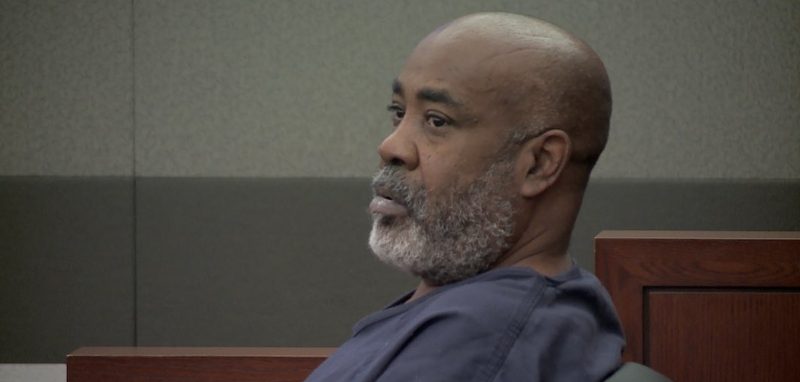
Keefe D requests certain evidence in 2Pac case raid be tossed
Nearly three decades after the fatal shooting of Tupac Shakur, one of the most enduring mysteries in hip-hop history may be inching closer to resolution. However, a new legal development could significantly impact the prosecution’s case against the man accused of orchestrating the rapper’s murder, Duane “Keefe D” Davis.
According to a recent report from CBS8, Davis’ legal team filed a motion on Monday, December 22, seeking to exclude certain evidence obtained during a nighttime police raid on his Henderson, Nevada home. The defense argues that the search was unlawful and violated Davis’ civil rights, potentially jeopardizing key evidence ahead of his highly anticipated murder trial.
Therefore, the motion introduces a new layer of complexity to a case that has already drawn national attention due to its historical significance and long delay in prosecution.
A Case That Has Haunted Hip-Hop for Decades
Tupac Shakur was fatally shot on September 7, 1996, after attending a Mike Tyson boxing match in Las Vegas. He died six days later at the age of 25. Despite widespread speculation, rumors, and public fascination, no one was charged in connection with the murder for nearly 30 years.
That changed in September 2023, when Duane “Keefe D” Davis was arrested and charged with first-degree murder. Prosecutors allege that Davis, a former gang member with long-standing ties to the case, orchestrated the shooting that killed Shakur.
Davis has long been a public figure in discussions surrounding the case, having previously spoken in interviews and a memoir about his alleged involvement. However, his arrest marked the first time anyone faced criminal charges directly tied to Shakur’s death.
The July 2023 Nighttime Raid Under Scrutiny
Central to the defense’s latest motion is a nighttime search conducted in July 2023 at Davis’ home in Henderson, Nevada. During that raid, police seized multiple items they believe are relevant to the case, though specific details about the evidence have not been fully disclosed publicly.
Davis’ attorneys argue that the search warrant authorizing the raid was improperly justified and that law enforcement failed to meet the legal standards required for nighttime searches under Nevada law.
Nighttime search warrants are generally subject to stricter scrutiny due to their intrusive nature. Defense lawyers claim that the warrant relied on exaggerated or misleading claims that unfairly portrayed Davis as a present-day threat, rather than accurately reflecting his current circumstances.
Defense Claims “Bad Faith” by Law Enforcement
In the motion filed with the Clark County District Court, Davis’ legal team argues that police acted in “bad faith” when seeking authorization for the raid.
“When officers obtain nighttime authorization through bad faith, courts agree suppression is appropriate,” the motion states.
Attorney Robert Draskovich, who represents Davis, reportedly contends that the affidavit supporting the warrant painted an inaccurate picture of his client. According to the defense, law enforcement portrayed Davis as a dangerous drug dealer despite the fact that his prior drug convictions are more than 25 years old.
The motion further emphasizes that Davis is now a 60-year-old retired cancer survivor who had lived quietly in the same Henderson home for nearly a decade prior to the raid. His attorneys argue that this context undermines claims that there was an urgent or dangerous situation justifying a nighttime search.
Questions Raised About Urgency and Public Safety
Another major argument raised by the defense centers on Nevada’s legal requirements for nighttime searches. State law generally requires case-specific urgency or clear safety concerns to justify such warrants.
Davis’ attorneys argue that the court relied on “generic safety theories” rather than concrete, case-specific risks. According to the motion, these justifications could apply to nearly any search and therefore do not meet the legal threshold required for nighttime authorization.
“The court overlooked the case-specific urgency or safety concerns Nevada law requires,” the motion reportedly states, arguing that the warrant should never have been approved under those circumstances.
If the judge agrees with the defense, evidence obtained during the raid could be suppressed, potentially weakening the prosecution’s case.
Prosecutors Defend the Strength of Their Evidence
Las Vegas District Attorney Steve Wolfson has publicly addressed concerns about the legality and strength of the evidence against Davis. Speaking at a press conference, Wolfson emphasized that prosecutors were careful and deliberate before filing murder charges.
“This is an important case,” Wolfson reportedly said. “We wanted to make sure we get it right, make sure we had legally admissible evidence, to make sure that we felt comfortable that we had sufficient legal evidence.”
Wolfson also stressed the seriousness of bringing a murder charge, noting that the justice system has a responsibility to ensure charges are supported by solid and lawful evidence.
“If you’re going to charge a person with murder, he has a right to believe that the system would only bring charges if there was sufficient legal evidence,” he added.
Davis’ Current Legal Situation
In addition to facing a murder charge, Davis is currently serving a prison sentence related to a separate incident. While awaiting trial, he was convicted of fighting another inmate, resulting in additional incarceration.
Despite these developments, the murder case remains the most significant legal challenge Davis faces. His trial is currently scheduled for August 2026, giving both sides ample time to argue pretrial motions and shape their strategies.
Legal experts note that motions to suppress evidence can play a decisive role in high-profile cases, especially those relying heavily on physical evidence obtained through searches.
What This Could Mean for the Trial
If the court rules in favor of Davis and excludes evidence seized during the July 2023 raid, prosecutors may be forced to rely more heavily on witness testimony, past statements, and other forms of evidence. Conversely, if the motion is denied, the prosecution’s case could proceed largely as planned.
The outcome of this legal challenge may also influence public perception of the case, particularly given its historical significance and emotional weight within the hip-hop community.
For many fans and observers, the case represents a long-overdue attempt to bring accountability for one of music’s most influential figures.
A Long Road Toward Answers
Nearly 30 years after Tupac Shakur’s death, the legal process surrounding his murder is still unfolding. While the arrest of Duane “Keefe D” Davis marked a major milestone, the case remains far from resolved.
As the court considers the defense’s motion and additional legal battles loom ahead, the question of whether justice will ultimately be served remains unanswered. What is clear, however, is that the road to resolution will continue to be closely watched by fans, legal experts, and the public alike.
With the trial still more than a year away, the coming months may prove critical in determining whether this landmark case finally delivers long-sought clarity—or faces new legal obstacles along the way.
The post Keefe D requests court to throw out certain evidence obtained in 2Pac murder case appeared first on Hip Hop Vibe.
source https://hip-hopvibe.com/news/keefe-d-requests-court-to-throw-out-certain-evidence-obtained-in-2pac-murder-case/
Comments
Post a Comment